IRC's no longer available at UK Post Offices......
- Details
- Created on Tuesday, 21 February 2012 14:21
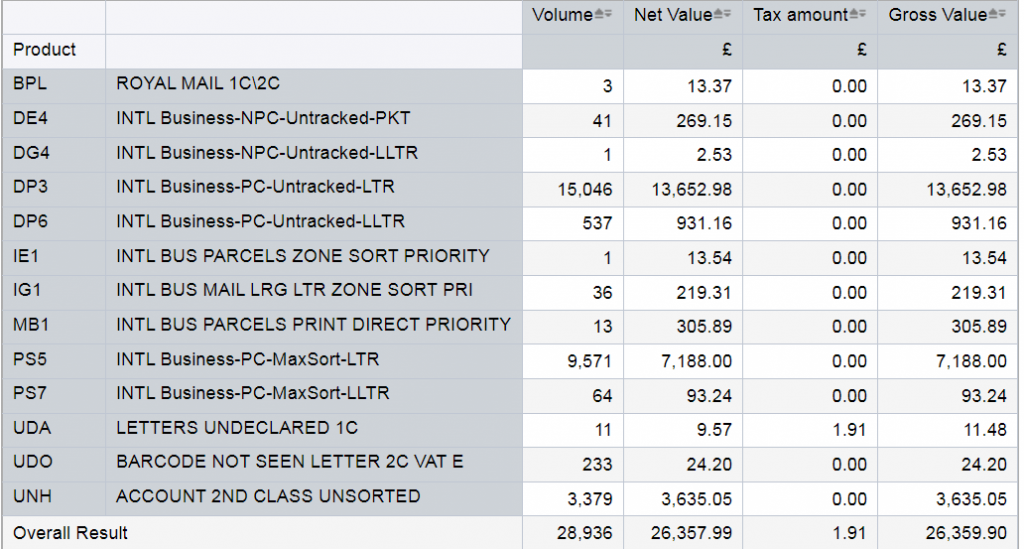
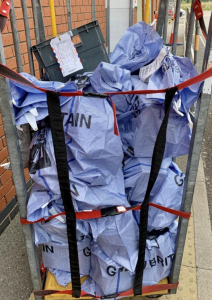
Well its official ! UK Post Offices have now stopped issuing International Reply Coupons (IRC's).
I tried at two main Branches locally today and both confirmed they have been axed.
There is a some hope though as they will still be valid for mailing as normal and the Post Office are still happy to accept them for that purpose.
Alignment of Planets in the Sunset Sky
- Details
- Created on Saturday, 18 February 2012 05:47
The brightest planets in the solar system are lining up in the evening sky, and you can see the formation—some of it at least—tonight.
Go out at sunset and look west. Venus and Jupiter pop out of the twilight even before the sky fades completely black. The two brilliant planets surrounded by evening blue is a beautiful sight.
If you go out at the same time tomorrow, the view improves, because Venus and Jupiter are converging. In mid-February they are about 20 degrees apart. By the end of the month, the angle narrows to only 10 degrees—so close that you can hide them together behind your outstretched palm. Their combined beauty grows each night as the distance between them shrinks.
A special night to look is Saturday 25th February when the crescent Moon moves in to form a slender heavenly triangle with Venus, Jupiter and the Moon as vertices. One night later, on Sunday 26th, it happens again. This arrangement will be visible all around the world, from city and countryside alike. The Moon, Venus and Jupiter are the brightest objects in the night sky; together they can shine through urban lights, fog, and even some clouds.
After hopping from Venus to Jupiter in late February, the Moon exits stage left, but the show is far from over.
In March, Venus and Jupiter continue their relentless convergence until, on the 12th and 13th of March, the duo lie only three degrees apart—a spectacular double beacon in the sunset sky.Click the image above for a Video account!
Nice opening as warm ups for ARRL Test appear..
- Details
- Created on Friday, 17 February 2012 13:12
Well let's hope things remain good over the weekend.After a very poor start to the day again the bands seem to have awoken this afternoon with some nice DX around lunchtime as the stations check their equipment prior to the ARRL DX Contest this weekend.
Here is a snippet so far, fingers crossed it stays this way at least this afternoon and weekend.
PZ5RO (new 10 & 12m CW),
PJ4/NK1Z (new 15m CW),
PJ4/WA1Z & V44KAI (both new 10m CW),
8P9CS (new 17m CW),
VR2OP and HC2/W7SE (both new 12m CW)
;-)
Europe Hammered by Winter, Is North America Next?
- Details
- Created on Friday, 17 February 2012 08:30
In North America, for the first half of this year's winter, the big news was warm temperatures and lack of snow. Ski resorts were covered in bare dirt, while January temperatures in southern California topped July highs!Then, out of the blue, Europe got clobbered: Over the past two weeks, temperatures in Eastern Europe have nose-dived to -30 degrees Celsius (-22 degrees Fahrenheit). Blizzards and the bone-chilling cold have resulted in the deaths of over 550 people so far, with rooftop-high snow drifts trapping tens of thousands of villagers in their homes and cutting off access to entire towns. It has even snowed as far south as North Africa. 
NASA climatologist Bill Patzert of the Jet Propulsion Laboratory explains what happened: "A couple of weeks ago, Mother Nature did an about face. The tight polar vortex that had bottled up the cold arctic air in the beginning of winter suddenly weakened. Cold air swept out of Siberia and invaded Europe and the Far East." Now the vortex is weakening.
With "the AO (Click here for information about Arctic Oscillation) Index going negative," as an expert or weather-nerd might put it, cold air escapes from that whirlpool and heads southward, resulting in the killing extremes now plaguing the other half of the planet.
Hubble Finds Relic of a Shredded Galaxy...
- Details
- Created on Thursday, 16 February 2012 14:23
Astronomers using the NASA/ESA Hubble Space Telescope have found a cluster of young blue stars surrounding a mid-sized black hole called HLX-1. The discovery suggests that the black hole formed in the core of a now-disintegrated dwarf galaxy. The findings have important implications for understanding the evolution of supermassive black holes and galaxies.
Astronomers know how massive stars collapse to form small black holes a few times the mass of the Sun. However, it is not clear how supermassive black holes, which can have masses of millions or even billions of times the Sun's, form in the cores of galaxies.
One idea is that supermassive black holes may build up through the merger of small and mid-sized black holes, a view supported by a new study using Hubble.
GB0ANT Qrv and this year looking for PSK & CW..
- Details
- Created on Monday, 13 February 2012 09:42
Qsl info click here (OQRS - Bureau or Direct)
'Antarctic Activity Week' is managed by the 'World-wide Antarctic Program'.
This Callsign will be active again from 18th to 26th Feb. 2012
This Year we will concentrate on PSK modes and CW

Our aim is to focus attention on the Continent of Antarctica..
See our Website http://www.m0oxo.com/special-callsigns/gb0ant-gb4ipy.html for further information.
Blank ''fill in yourself'' Qsl Cards now available
- Details
- Created on Friday, 10 February 2012 08:19

UX5UO Qsl Print is now issuing Blank Qsl Cards.
Demand has been such that these cards can be bought is very small batches of 10, 20, 50, 100, 200 pcs, no problem. If you are interested have a look here and scroll down the page for pricing and designs.

As usual if you are interested please contact M0OXO for more details.
These cards will be held in stock with M0OXO and can be issued within 24 hours from order.Using Twitter AND CW (Morse) together? Its true!!!
- Details
- Created on Thursday, 09 February 2012 08:06
Just when you think you know about technology convergence, along comes the simple Arduino project. It involves a Morse code key, somewhat an old switch, with a new use in the form of modern Twitter. An open design exercise in interface archaeology, that decodes the input from a classic Morse key to send twitter messages.
The Tworse Key is a standalone device that connects through a standard LAN cable, the Morse signals are decoded by the built-in Arduino Ethernet board, which delivers the final message though the Twitter API.
Please follow @tworsekey on Twitter to read some example tweets sent from the actual device.
PS5F SA-088 - M0OXO IOTA # 521....
- Details
- Created on Sunday, 05 February 2012 09:41
Thanks to the PS5F Team for IOTA number 521 this morning from Santana de Foro, Brazil. Signals weak and 4/4 at best but good ears on the ops. enabled me to log it successfully!
Imbituba is one of the most attractive beach destinations in Brazil. Best known as the home of Brazil's Southern Right Whale Project and as a great place for surfing, windsurfing and kitesurfing.
Imbituba has beautiful beaches ranging from a more urban atmosphere to rustic, pristine beaches. Central Praia da Vila (Village Beach), great for whale watching, bodyboarding and surfing. It faces two islands - Santana de Fora and Santana de Dentro. The latter can be reached on foot during low tides.
Sky watch......
- Details
- Created on Sunday, 05 February 2012 08:32
PLANETS TO VIEW: Venus is well up in the southwest after dusk, with Jupiter nearly south and high. Mars will be in the east by 9 p.m., and Saturn will be in the east by 1 a.m. Mercury is out of sight for now.
THE MOON becomes full Tuesday and will be extremely bright and high every night this week, making dark-sky stargazing difficult.
THIS WEEK: Despite the bright moonlight, there will be some interesting things to spot in the sky, especially tonight.
Look just below and right of the gibbous moon, and you'll spot a very bright star. This is Procyon, the brighter half of the two-star constellation Canis Minor (the Pup or Little Dog).
Procyon forms an interesting quadrangle with Sirius (below and right), Betelgeuse (right and nearly even) and Rigel (beyond Betelgeuse and Sirius). This is the tightest concentration of stars of zero magnitude or brighter anywhere in the sky in either hemisphere.
Procyon is a yellow star like the sun, only larger. Like Sirius, it is a relative neighbor at about 11 light years away (Sirius is 8 light years away). Betelgeuse and Rigel are 300 and 600 light years off respectively.
Heavy Snow warning....
- Details
- Created on Saturday, 04 February 2012 05:28
This is a Weather Watch issued by Metcheck at 08:47 on Friday 03rd February 2012. Apart from the risk of some snow showers affecting parts of East Anglia and southeast England on Friday night, bringing a slight covering in places, the main risk of snow this weekend comes during Saturday and Sunday as an Atlantic weather front moves in from the west.
There is some uncertainty over how much snow may fall, but at the moment it looks like outbreaks of rain will move in across western areas of England and Wales during Saturday afternoon and evening, before spreading to central and eastern areas
Congrats. to Keith M0KYI - Another M0 in Yorkshire!
- Details
- Created on Friday, 03 February 2012 15:28

Well done to my mate Keith (2E0KYI) on his successful pass of the Advanced Licence Examination held a few days ago. He fully deserves it and I am very pleased to hear the news this afternoon.
Well done matey, look forward to working M0KYI on the Bands!
Congratulations also to Ken (2E0SSQ) who also passed the Advanced exam, his new Callsign M0SSQ, well done Ken!
New Ham Shack for the Visually Impaired - ZS8M
- Details
- Created on Friday, 03 February 2012 14:05

Great news from Pierre ZS8M - He has established a Ham Radio Shack for the visually impaired in South Africa.
This is what Pierre tells us;
Greetings All,
As I stated on my www.qrz.com/db/zs8m web page, I have established a ham shack for four visually impaired radio hams in Worcester. The equipment was purchased from the donations of the ZS8M qsl cards. The Icom IC-718 also has a voice module to assist them with frequency and mode selection, while the antenna is a military grade broad band HF antenna allowing them to select bands easily.
Photos ; Top Left - Pierre with Andre ZR1ATS, Ray and David, Bottom - Inspecting the Icom 718
More pictures will be posted on qrz.com soon.
**Well done Pierre, you are a credit and held in high esteen by all Radio Hams around the World. This latest story just confirms that. Well done Pierre!!

TF4M in the high Arctic...
- Details
- Created on Wednesday, 01 February 2012 07:39
Click the images to have a look at the website of Thor TF4M, a site you will really enjoy with excellent information and images from the high Arctic.
His biography begins;
''I grew up in the countryside and became used to physical work at an early age. I worked in the Whaling Station in Hvalfjordur for 7 summer seasons and during winters I worked at sea as a deckhand on various fishing vessels and trawlers.
I learned Wire and Rope Splicing (Ships Rigging) and worked in this specialist trade for several years. I drove Taxis for a few years and I got my Amateur licence in 1984. I worked for a while at the TFA and TFT Coast Stations – Ship to Shore service as a radio operator and I served as a Field Service Officer with the UN from 1991 to 2003.''
.....click the images below to go directly to Thor's website....
Pitcairn Island - DXCC #308 IOTA #519
- Details
- Created on Tuesday, 31 January 2012 09:38
Well finally got the elusive Pitcairn Island VP6T in the log but with great difficulty! That brings me to DXCC #308 and IOTA #519.
So, in the last week thats 3 all time new ones logged, VP6T, HK0NA and VK0TH. C21HA Nauru still eludes me but will keep persevering it may be worth it i guess for the last of the all time new ones that are currently Qrv!
Thanks to Nigel G3TXF for pulling me out of the noise in the Pitcairn pile up ;-)
DP0GVN/P – Perennial Acoustic Observatory postponed.....
- Details
- Created on Tuesday, 31 January 2012 08:07
These details announced late on Sunday night ; ''I am very sorry to say that due to unforesesable circumstances, DL1LLL is not available for the field trip today, so our operation from PALAOA Observatory has to be postponed. It is definitely not cancelled, and I will announce the new date as soon as possible.
Please accept our apologies. We’re still working on making it happen!''
Good luck next time guys...
HK0NA making good progress.....
- Details
- Created on Wednesday, 25 January 2012 08:27
HK0NA doing well and being audible on most bands albeit there is a big difference with signals between the South and the North of the UK. Recent Solar Flares and general propagation not helping the smaller stations up here in the North.
Malpelo Island (Spanish: Isla de Malpelo) is an island located 235 miles (378 km) from Colombia’s Pacific coast, and approximately 225 miles (362 km) from Panama’s coast. It has a land area of 0.35 square kilometres (86 acres). It is uninhabited except for a small military post manned by the Colombian Army, which was established in 1986. Visitors need a written permit from the Colombian Ministry of Ecology. The island is part of Cauca Department.
The island consists of a sheer and barren rock with three high peaks, the highest being Cerro de la Mona with a height of 300 metres (980 ft). The island is surrounded by a number of offshore rocks. Off the northeast corner are the Tres Mosqueteros. Off the southwest corner are Salomon, Saul, La Gringa, and Escuba. Malpelo Nature Reserve, a plant and wildlife sanctuary, is defined as a circular area of radius 9.656 kilometres (6.000 miles).

Special callsigns for amateur radio stations during 2012....Qsl Cards by UX5UO...
- Details
- Created on Monday, 23 January 2012 11:20
The Radio Society of Great Britain and Ofcom have reached agreement on the optional use of special callsigns for two significant events during 2012.
For the Queen’s Diamond Jubilee, all UK amateur stations will have the option of applying for a variation to their licence if they wish, to use a special prefix for a five week period. This will add or substitute the letter “Q” in the place of the Regional identifier in the callsign (MQ0OXO, GQ4RCG etc).
For the period of the Olympic Games and Paralympic Games, a similar facility will exist for a seven week period, using the letter “O” (MO0OXO, GO4RCG etc)
Furthermore, calls in the series GB2012aaa will be available for Special Event Stations relating to the Olympics and licences will be issued for four “flagship” stations using the prefix 2O12a where “O” is the letter O, and a is a single letter relating to the location of the station.
If you are considering Qsl Cards for thois event for personal, special event or club activities, Qsl Cards for these events are already being made to UX5UO Qsl Print. Details of special costs, batch sizes and style of cards can be found on the UX5UO Website or email me (M0OXO) to discuss.
Closest Flyby of Dione yet!!!
- Details
- Created on Saturday, 21 January 2012 07:39
Flying past Saturn's moon Dione, Cassini captured this view which includes two smaller moons, Epimetheus and Prometheus, near the planet's rings. The image was taken in visible light with Cassini's narrow-angle camera during the spacecraft's flyby of Dione on 12th December, 2011. This encounter was the spacecraft's closest pass of the moon's surface, but, because this flyby was intended primarily for other Cassini instruments, it did not yield Cassini's best images of the moon.
Dione (698 miles, or 1,123 kilometers across) is closest to Cassini here and is on the left of the image. Potato-shaped Prometheus (53 miles, or 86 kilometers across) appears above the rings near the center top of the image. Epimetheus (70 miles, or 113 kilometers across) is on the right.
This view looks toward the northern, sunlit side of the rings from less than one degree above the ring plane. The view was acquired at a distance of approximately 67,000 miles (108,000 kilometers) from Dione. Image scale is 2,122 feet (647 meters) per pixel on Dione.
Incoming CME.....
- Details
- Created on Saturday, 21 January 2012 06:57
Active sunspot 1401 erupted yesterday, 19th January around 16:30 UTC, producing an M3-class solar flare and a full-halo coronal mass ejection (CME). The Solar and Heliospheric Observatory recorded the cloud expanding almost directly toward EarthAnalysts at the Goddard Space Weather Lab say strong geomagnetic storms are possible when the cloud arrives this weekend. Their animated forecast track predicts an impact on 21st Jan. at 22:30 UT (+/- 7 hrs).
The cloud is also heading for Mars, due to hit the Red Planet on Jan. 24th. NASA's Curiosity rover, en route to Mars now, is equipped to study solar storms and might be able to detect a change in the energetic particle environment when the CME passes by.
CQWW WPX result for MW0X...
- Details
- Created on Saturday, 21 January 2012 06:39
It was a nice suprise to receive this Certificate through the door yesterday!1st place in Wales CQWW WPX last year for Single Op. 10M SSB category.
I entered the Contest using my Contest Call MW0X (M0X when in 'G') from the Club Station of the StrumbleHead Contest & DX Group in
Wales.
Congrats also to Chris G1VDP who took the 15M Band 1st place and also Anthony MW0JZE who took 1st place whilst on the Island of Jersey as MJ0JZE.
Overall a good Contest for the StrumbleHead guys!